
BLYTHEWOOD — Questions surrounding a $500 Freedom of Information (FOI) fee charged to The Voice took center stage at the Town Council’s January 28 meeting. However, after a lengthy discussion, council members stopped short of making any immediate changes, opting instead to revisit the issue at a later date.
The $500 FOI Charge
The matter stems from a December 19 FOI request submitted by The Voice as part of its investigation into $20,000 in hospitality tax funds awarded to Edward Straiter and Universal CMG World Entertainment for the Town’s 2025 Juneteenth event.
On January 16, Town Attorney Pete Balthazar informed the newspaper that retrieving the requested emails would cost $500. A $125 deposit would be required before the Town’s IT vendor, Asset Technology Group, would conduct the search.
After obtaining and reviewing the Town’s contract with Asset Technology Group, The Voice reported that it found no specific language referencing a $500 fee for email searches.
Council Members Raise Concerns
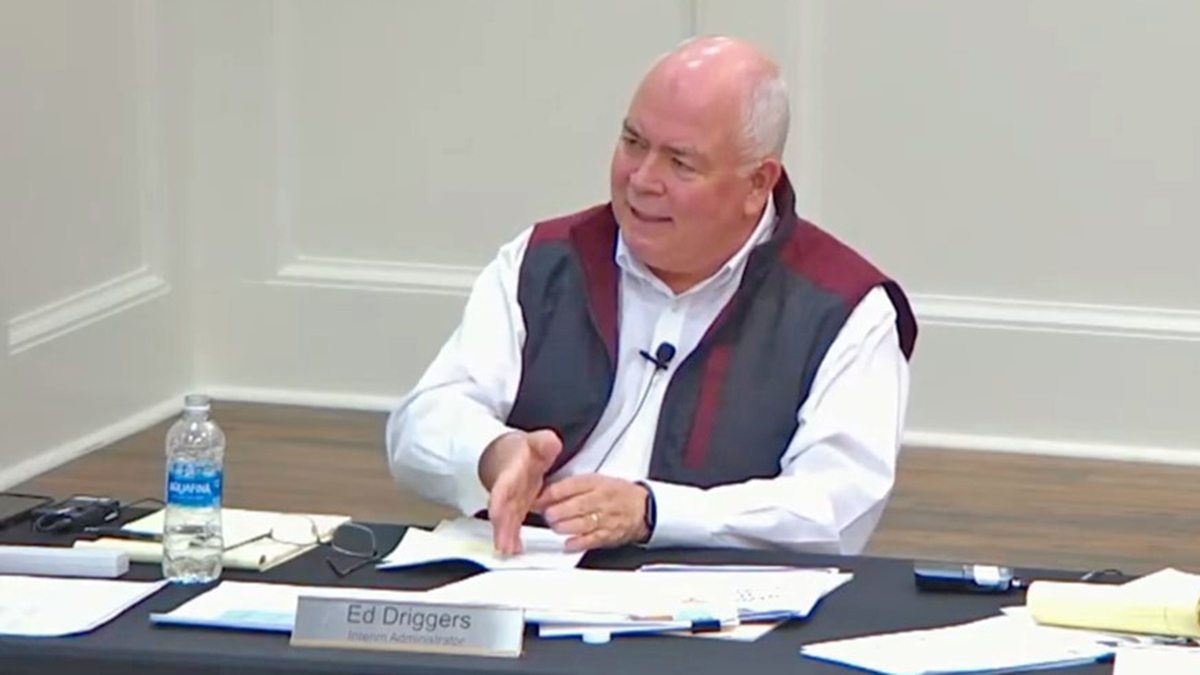
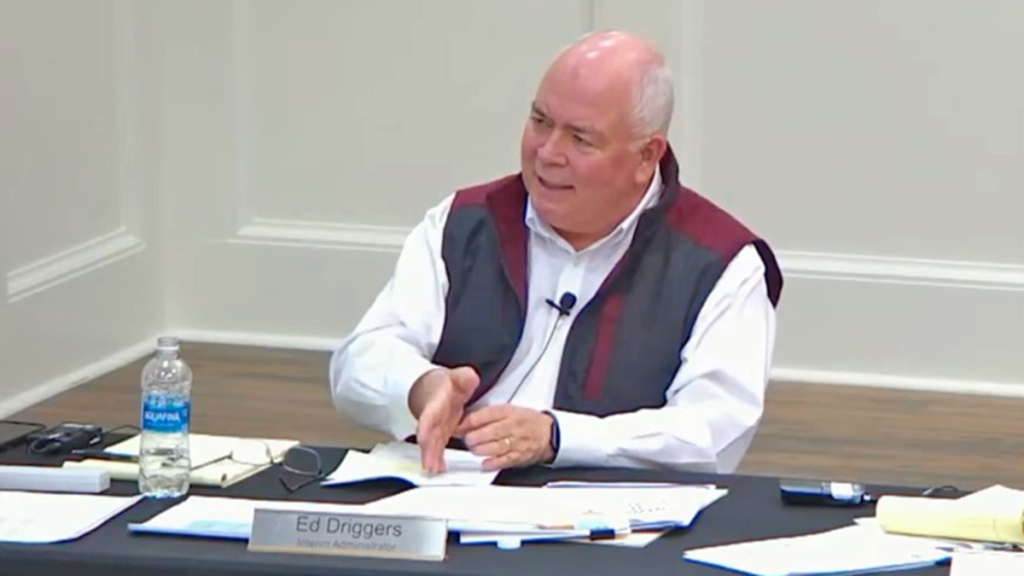
At the January 28 meeting, Councilmembers Donald Brock, Trish Hovis, and Rich McKenrick pressed Interim Town Manager Ed Driggers for clarification.
“$500 strikes me as excessive and somewhat of a deterrent,” Brock said, questioning whether the fee was supported by the Town’s agreement with its IT vendor.
Driggers acknowledged that the contract does not explicitly mention a $500 email search fee. He explained that email searches fall outside the vendor’s standard contracted services and are therefore billed separately.
When asked whether the Town could conduct searches in-house to reduce costs, Driggers responded that it could not, citing the fact that the Town does not host its own data. He also raised concerns about privacy limitations when accessing employee email accounts.
That assertion was challenged during the meeting. Media attorney Jay Bender, who represents the South Carolina Press Association, has stated publicly that there is no expectation of privacy in government records and that outsourcing public records management to a private company can conflict with transparency principles.
Conflicting Information on Fees
Further confusion arose when Town Clerk Sharon Durst shared that she had recently been involved in an FOI request for emails between her and the mayor. In that instance, she said, the IT vendor conducted the search without charging a fee.
Durst noted that charges might apply if keyword searches are requested, but no fee was assessed in her case. The December 19 FOI request from The Voice sought emails between specific individuals, not keyword-based searches.
Councilman Brock pointed out the inconsistency, noting that some searches appear to trigger fees while others do not.
Driggers later stated that Asset Technology Group’s general policy includes a minimum charge of $150 per hour for at least two hours of work. He added that earlier discussions placed the cost at $500, but more recent conversations suggested the fee might be reduced to $300. That pricing structure, however, is not specifically outlined in the vendor contract in connection with email searches.
Legal Interpretation of FOI Fees
Councilman McKenrick questioned whether the Town remains compliant with state FOI law when charging third-party vendor fees rather than the prorated hourly wage of the lowest-paid qualified employee, as is typically applied to in-house searches.
Town Attorney Balthazar responded that when the Town must rely on a third-party vendor, it may recover reasonable costs associated with search and retrieval. He cited the FOI statute, which permits agencies to collect fees not exceeding the actual cost of producing records.
Balthazar stated that if the vendor charges $300 or $500, that amount represents the Town’s actual cost of retrieval.
Possible Policy Changes — But No Immediate Action
The FOI fee issue had also been discussed during the Town’s January 12 strategic planning session, where council members expressed concern over both the cost and the time it takes to fulfill records requests.
“There’s no reason we should take 40 or 50 days to produce something that’s available electronically in 10 minutes,” Brock said during that earlier discussion.
At the conclusion of the January 28 meeting, however, the council did not vote to amend the FOI policy or address the fee structure directly. Instead, Brock asked Driggers to continue discussions with Asset Technology Group and return with possible options for council review.
Driggers also requested permission to review the Town’s FOIA policy and propose revisions. Council agreed.
Deadline Concerns
As of February 4, the Town had not issued a determination on all items included in the December 19 FOI request. Under the South Carolina Freedom of Information Act, agencies have 10 working days to notify a requester whether records will be produced. At that point, the Town was 19 days beyond the statutory deadline for making a determination on all requested items.
Among the outstanding documents are:
- The application for the $20,000 hospitality tax funding
- Any contract between the Town and Universal CMG World Entertainment
- The reconciliation or expenditure report that should have been submitted after the funds were spent
The Blythewood Town Council is scheduled to meet again on February 23 at the Manor, where the issue may resurface.