
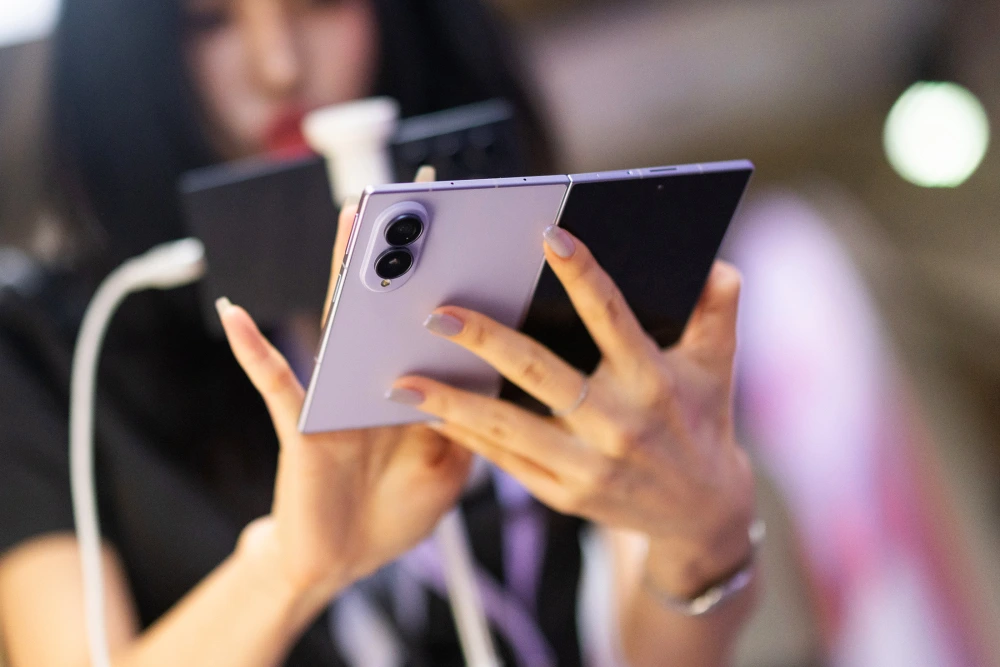
8, Galaxy Z Fold 8 Ultra, and Galaxy Z Flip 8. While the names may soFold und confusing, the company’s newest devices signal a much bigger story than another annual hardware refresh.Samsung has officially unveiled its latest lineup of foldable smartphones, introducing the Galaxy Z
With Apple widely expected to debut its first foldable iPhone later this year, the race to define the future of foldable smartphones is entering a critical new phase. Samsung, which has spent nearly seven years refining foldable technology, is hoping its latest designs will strengthen its lead before Apple joins the competition.
Three Foldables, Three Different Designs
Although Samsung’s new devices share many of the same software features and premium hardware, their biggest differences come down to how they fold and who they’re designed for.
Galaxy Z Fold 8
The standard Galaxy Z Fold 8 introduces Samsung’s biggest design change in years. Instead of the tall, narrow shape seen in previous Fold models, the new device unfolds into a wider 4:3 landscape display, giving it a tablet-like experience that’s better suited for watching videos, multitasking, reading, and productivity.
Samsung describes the Fold 8 as an all-new design aimed at users who want a larger, more natural viewing experience. The device starts at $1,900.
Galaxy Z Fold 8 Ultra
The Fold 8 Ultra retains the taller, narrower design found in earlier Fold generations. Samsung is positioning it as the premium option for power users, pairing the familiar vertical form factor with one of the company’s largest smartphone batteries to date for improved endurance.
The Galaxy Z Fold 8 Ultra starts at $2,100.
Galaxy Z Flip 8
Meanwhile, the Galaxy Z Flip 8 continues Samsung’s clamshell approach, folding vertically like the flip phones that were popular in the early 2000s. The compact design appeals to users looking for a smaller phone that easily fits into a pocket while still offering a large display when opened.
The Flip 8 starts at $1,200.
All three devices are scheduled to begin shipping on August 7.
The Fold 8 Could Be Samsung’s Most Important Foldable Yet
Among the three announcements, the Galaxy Z Fold 8 may prove to be Samsung’s most significant release.
Its wider display represents a notable shift away from the narrow book-style design Samsung has used for years. The larger aspect ratio creates a more comfortable experience for streaming movies, gaming, web browsing, and using multiple apps side by side.
Industry observers have noted that Apple’s first foldable iPhone is rumored to feature a similarly wide folding design, suggesting Samsung may be positioning the Fold 8 to compete directly with its biggest rival before Apple’s device even reaches consumers.
Samsung Looks to Defend Its Seven-Year Head Start
Samsung has dominated the foldable smartphone market since launching its first Galaxy Fold in 2019. Over multiple generations, the company has improved durability, hinge technology, display quality, water resistance, and software optimized for folding screens.
That experience gives Samsung a significant advantage as competitors—including Apple—prepare to expand into the premium foldable segment.
Following the product announcement, one of Samsung’s senior executives emphasized the company’s years of innovation in foldable technology, even as speculation grows about Apple’s long-awaited entry into the category.
A New Era for Foldable Smartphones
The timing of Samsung’s launch is particularly important. Beyond increasing competition, smartphone manufacturers are also facing rising production costs, driven in part by continued memory (RAM) pricing increases and broader supply chain pressures that are affecting consumer electronics worldwide.
Despite those challenges, Samsung is betting that foldable devices are moving beyond being niche products and becoming a major part of the premium smartphone market.
Whether consumers choose Samsung’s latest Fold or Flip models—or decide to wait for Apple’s rumored foldable iPhone—one thing is becoming increasingly clear: the competition to shape the future of smartphones is no longer about who builds the best traditional handset, but who delivers the most compelling foldable experience.