GUWAHATI, India — The death toll from a devastating tunnel explosion at an under-construction hydroelectric project in India’s northeastern state of Sikkim has risen to 22, after rescue teams recovered seven more bodies from the site on Thursday, state government officials confirmed.
The tragic incident occurred on Monday inside a tunnel being built as part of the National Hydroelectric Power Corporation (NHPC) Ltd.’s hydroelectric project on the Teesta River near the village of Samardung.
According to officials, the explosion is believed to have been triggered by methane gas trapped within or suddenly released from underground rock formations. The blast rapidly filled the tunnel with thick smoke and toxic gases, leaving workers with little time to escape and trapping 25 NHPC employees and officials inside.
In a statement shared on Facebook, the Sikkim state government said rescue operations remain ongoing despite extremely hazardous conditions.
“Rescue operations remain in progress, with specialized teams working in close coordination to locate and recover the remaining victims,” the government said.
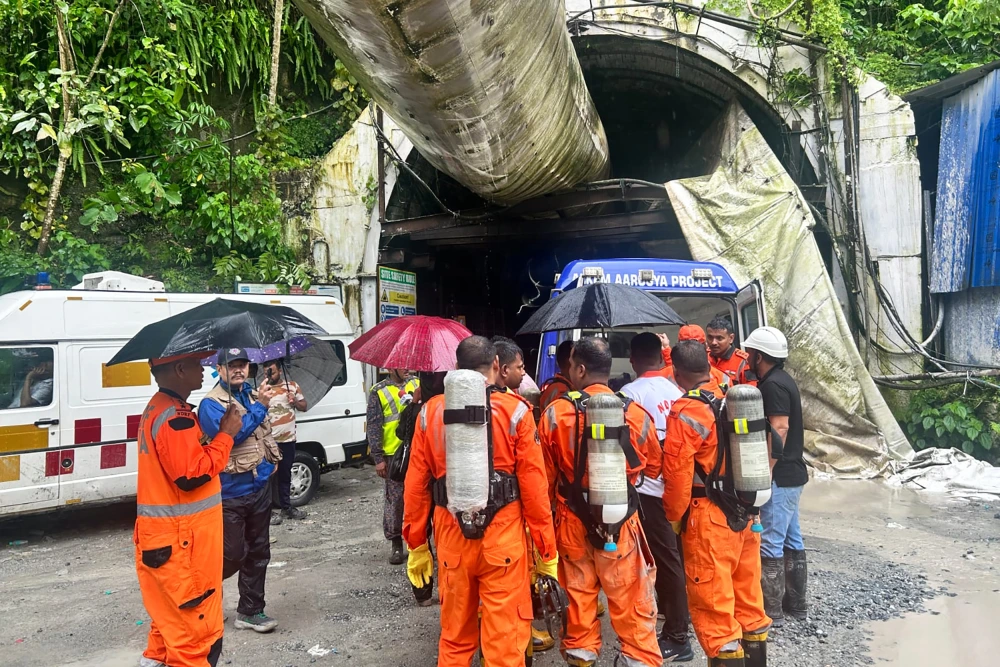
Emergency crews, including disaster response personnel and technical experts, have been working around the clock to reach those still unaccounted for. However, authorities have acknowledged that the operation has become increasingly difficult due to the dangerous environment inside the tunnel.
Rescue efforts have been slowed by large accumulations of mud and water, along with the continued presence of suspected toxic gases, making it unsafe for teams to remain underground for extended periods. Officials also reported that poor air quality and limited visibility have complicated search efforts.
Earlier this week, authorities warned that the chances of finding any survivors were extremely low given the amount of time that had passed and the severe conditions inside the tunnel.
The NHPC, India’s state-owned hydropower company overseeing the project, announced on Wednesday that it will provide 500,000 Indian rupees (approximately $5,178) in ex gratia compensation to the families of each worker who lost their life in the disaster.
The tunnel collapse and explosion have once again raised concerns about safety standards at large infrastructure and hydropower projects in India’s mountainous Himalayan region, where difficult geological conditions and underground gas pockets can pose significant risks during construction.
Investigators are expected to examine the exact cause of the methane buildup and determine whether additional safety measures could have prevented the tragedy. Meanwhile, rescue teams continue their painstaking efforts to recover the remaining victims and bring closure to the affected families.