ALFONSO, Philippines — A newly built replica of the House of the Virgin Mary is drawing growing numbers of Catholic pilgrims in the Philippines, offering believers a place for prayer, reflection, and spiritual renewal without having to travel thousands of miles to Turkey.
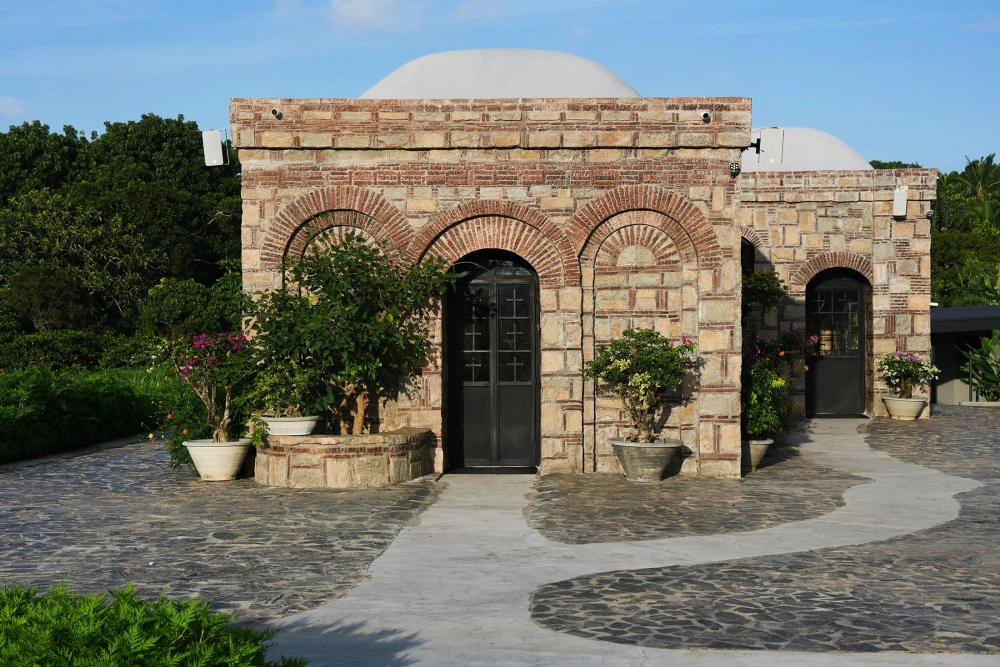
Located in the quiet town of Alfonso in Cavite province, about 45 miles (72 kilometers) south of Manila, the shrine faithfully recreates the revered house in Ephesus, Turkey, where Catholic tradition holds that the Virgin Mary spent the final years of her earthly life after the crucifixion of Jesus Christ.
The replica, inaugurated in 2024, has quickly become a destination for pilgrims from across the Philippines and neighboring countries. It recently welcomed hundreds of worshippers during celebrations for the Feast of Our Lady of Mount Carmel in mid-July, one of the significant observances in the Catholic calendar.
A faithful recreation of a sacred site
The Philippine shrine spans approximately 720 square feet and was designed to closely resemble the original structure in Ephesus. According to its creators, every effort was made to match the original building’s dimensions, stonework, shape, and overall appearance, giving visitors a sense of what the historic site looks and feels like.
The original House of the Virgin Mary, situated near the ancient city of Ephesus in modern-day Turkey, is one of the world’s most visited Christian pilgrimage destinations. Although the Vatican has not officially declared it to be Mary’s historical residence, it has long been recognized as a place of deep spiritual significance and has been visited by several popes over the years.
Catholic tradition teaches that after Jesus’ crucifixion, the Apostle John took Mary to Ephesus to protect her from persecution in Jerusalem. It is believed that she lived there until her Assumption into heaven.
A place of peace and acceptance
The driving force behind the Philippine project was Father Dennis Paez, the priest who envisioned creating a sanctuary where people from all walks of life could find comfort.
“The idea began as a place of refuge,” Paez said. “This is a place where no questions are asked.”
Rather than serving solely as a tourist attraction or historical exhibit, the shrine was built to be a welcoming spiritual retreat for anyone seeking hope, healing, or quiet reflection.
Paez, who is also a psychologist specializing in youth mental health, explained that the mission of the shrine extends beyond traditional religious practice.
“The apostolate of this place is to accept people with unconditional positive regard,” he said. “There is no therapy here. The therapist is our Mother.”
His message reflects the belief that the Virgin Mary offers compassion, comfort, and guidance to those experiencing emotional or spiritual struggles.
Built through unity
Construction of the replica took approximately 10 months to complete. According to Paez, the project brought together workers from different religious backgrounds, a collaboration he viewed as symbolic of Mary’s universal message of love and unity.
He said the diverse team demonstrated that faith can inspire cooperation across different beliefs, with everyone contributing to the creation of a place dedicated to peace and prayer.
A growing pilgrimage destination
As the world’s third-largest Catholic country and home to more than 80 million Catholics, the Philippines has a rich tradition of Marian devotion. The new shrine is expected to become an increasingly important pilgrimage destination, particularly for those unable to make the long journey to Turkey.
Visitors continue to arrive seeking spiritual renewal, offering prayers, lighting candles, and participating in religious celebrations, reinforcing the shrine’s role as a place of faith, reflection, and community.
For many devotees, the replica provides a rare opportunity to experience the atmosphere of one of Christianity’s most cherished pilgrimage sites while remaining in the heart of Asia’s largest Catholic nation.