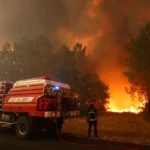
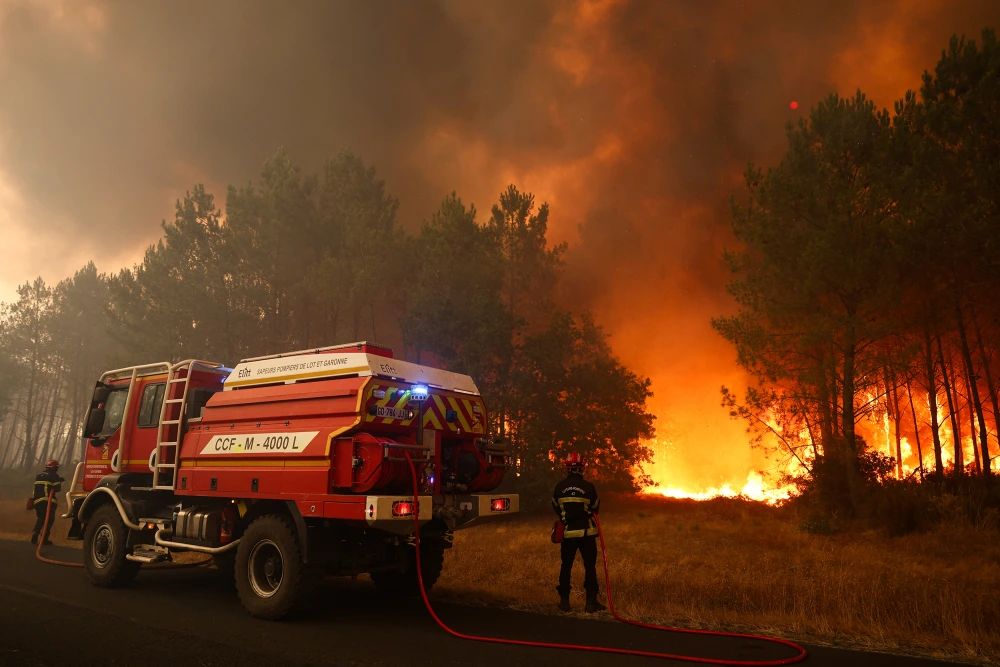
Thousands of people have been forced to flee their homes as devastating wildfires continue to sweep across Spain and southern France, prompting emergency responses on both sides of the border amid an intense summer heatwave.
Spain’s government declared a national emergency on Friday after rapidly spreading wildfires in the central region surrounding Madrid forced the evacuation of approximately 10,000 residents, while authorities in southern France ordered tens of thousands more to leave their homes as two major fires threatened communities.
The blazes, fueled by scorching temperatures, dry vegetation, and strong winds, have become part of one of the most severe wildfire seasons seen in Western Europe in recent years.
Spain activates national emergency response
The declaration of a national emergency allows Spain’s Interior Ministry to coordinate firefighting operations nationwide, taking command of emergency efforts from regional authorities. The ministry, which oversees the country’s police and security forces, is now directing resources to combat multiple active fires burning across the country.
Officials said the decision was necessary as regional firefighting teams struggled to contain several fast-moving blazes intensified by an ongoing heatwave.
The Madrid regional government, which covers the capital and surrounding municipalities, reported that around 10,000 people were evacuated from several villages after multiple wildfires spread rapidly late Thursday.
Emergency shelters were opened for displaced residents, while firefighters, military emergency units, helicopters, and water-dropping aircraft were deployed to slow the advancing flames.
Fires fueled by extreme heat
Meteorologists say prolonged periods of extreme heat, low humidity, and gusty winds have created ideal conditions for wildfires to ignite and spread quickly across the Iberian Peninsula.
Much of Spain has endured repeated heatwaves this summer, leaving forests and grasslands exceptionally dry. Fire crews have faced difficult conditions as shifting winds caused flames to change direction rapidly, complicating containment efforts.
Authorities have urged residents in affected areas to follow evacuation orders immediately and avoid traveling near active fire zones.
Hundreds of square miles already destroyed
The scale of this year’s wildfire season has alarmed officials.
According to government estimates, approximately 500 square miles (about 1,295 square kilometers) of land have already burned across Spain in 2026. That is more than four times the area that had burned during the first half of 2025, highlighting the dramatic increase in wildfire activity.
Environmental experts warn that increasingly frequent heatwaves and prolonged drought conditions are contributing to longer and more destructive fire seasons across southern Europe.
Southern France also under threat
Across the border, southern France is confronting two major wildfires that have forced tens of thousands of residents and tourists to evacuate vulnerable communities.
French firefighters have been battling rapidly spreading flames in rugged terrain, with aircraft dropping water and fire retardant over affected areas. Emergency services have worked through the night to protect homes and critical infrastructure while helping residents escape advancing fires.
Authorities have closed several roads and urged people to stay away from affected regions as smoke reduced visibility and air quality deteriorated.
Europe faces another intense wildfire season
The simultaneous outbreaks in Spain and France underscore the growing challenges European countries face during increasingly hot and dry summers.
Scientists have repeatedly warned that climate change is increasing the likelihood of extreme weather events, including prolonged heatwaves that leave vegetation highly combustible and allow wildfires to spread more rapidly.
Emergency officials in both countries remain on high alert, with forecasts indicating that high temperatures and dry conditions could persist in the coming days. Firefighters continue working around the clock to contain the blazes, protect communities, and prevent additional outbreaks as thousands of displaced residents wait to learn when it will be safe to return home.