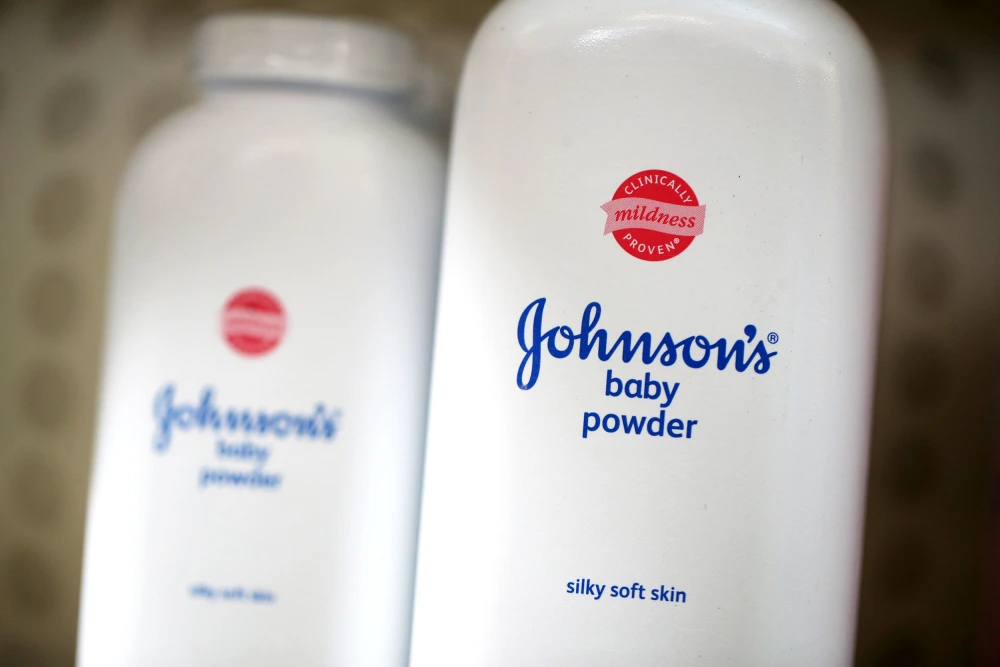
NEW YORK — Johnson & Johnson (J&J) has reached a landmark $5.5 billion settlement that could bring an end to one of the largest and longest-running product liability battles in U.S. history. The agreement aims to resolve approximately 76,000 lawsuits alleging that the company’s baby powder and other talc-based products caused ovarian cancer.
The settlement marks a significant milestone in litigation that has followed the healthcare giant for more than a decade, with thousands of women claiming they developed cancer after prolonged use of talc products. While J&J continues to deny that its products are unsafe, the company said the agreement represents a practical step toward closing years of costly legal disputes.
Settlement Covers the Vast Majority of Remaining Claims
According to Johnson & Johnson, the proposed agreement resolves nearly all outstanding ovarian cancer claims filed against the company. These include cases consolidated in federal court in New Jersey, as well as thousands of lawsuits pending in state courts across the United States.
The company noted that it had already resolved most lawsuits alleging that its talc products contained asbestos and caused mesothelioma, another form of cancer linked to asbestos exposure. The new settlement focuses primarily on ovarian cancer claims, which have made up the largest remaining portion of the litigation.
If finalized, the agreement would effectively close one of the most high-profile legal battles facing the pharmaceutical and consumer products giant.
Plaintiffs Call Deal a Major Breakthrough
Law firms representing thousands of plaintiffs welcomed the settlement, describing it as a fair resolution after years of complex legal proceedings.
However, the agreement is not yet complete. Under its terms, at least 95% of eligible ovarian cancer claimants in both state and federal courts must approve the settlement before it becomes legally binding. If that threshold is met, the deal is expected to significantly reduce the company’s exposure to future litigation related to ovarian cancer claims.
Attorneys representing affected women said the settlement provides long-awaited compensation for many families who have spent years pursuing legal action.
Johnson & Johnson Maintains Product Safety
Despite agreeing to the multibillion-dollar payout, Johnson & Johnson reiterated that it does not admit wrongdoing and continues to stand by the safety of its talc products.
The company has consistently argued that decades of scientific studies and regulatory reviews support the safety of cosmetic talc and that its products do not cause ovarian cancer or contain harmful levels of asbestos. J&J has maintained that the settlement is intended to avoid the uncertainty, expense, and prolonged nature of continued litigation rather than acknowledge liability.
A Decade of Legal Challenges
The talc litigation has become one of the most significant mass tort cases in recent U.S. history. Since the early 2010s, tens of thousands of women have sued Johnson & Johnson, alleging that long-term use of its talc-based baby powder and other products contributed to the development of ovarian cancer.
Over the years, the company has faced numerous jury trials, with some verdicts awarding plaintiffs substantial damages, while other cases ended in victories for J&J or were overturned on appeal.
The legal battle has also included several controversial attempts by the company to resolve claims through bankruptcy proceedings involving a subsidiary—a strategy that was repeatedly challenged in court and ultimately rejected.
What Happens Next?
The proposed settlement now enters a critical approval phase, during which eligible claimants must decide whether to accept the terms. If the required participation threshold is reached, the agreement could finally bring closure to litigation that has weighed on the company for more than ten years.
For Johnson & Johnson, the settlement offers an opportunity to move beyond one of its most costly legal disputes while continuing to focus on its pharmaceutical and medical technology businesses. For thousands of plaintiffs and their families, it represents the possibility of long-awaited financial compensation after years of court battles.
If approved, the $5.5 billion agreement will rank among the largest product liability settlements in U.S. history and could mark the conclusion of one of the most closely watched corporate legal cases of the past decade.